The Fabric Education (Quality Proof) This blog post is designed to be highly informative, positioning your brand as an expert in fabric quality. By breaking down the complexities of textile grades, weave types, this section provides customers with the transparency they need to make confident purchasing decisions.
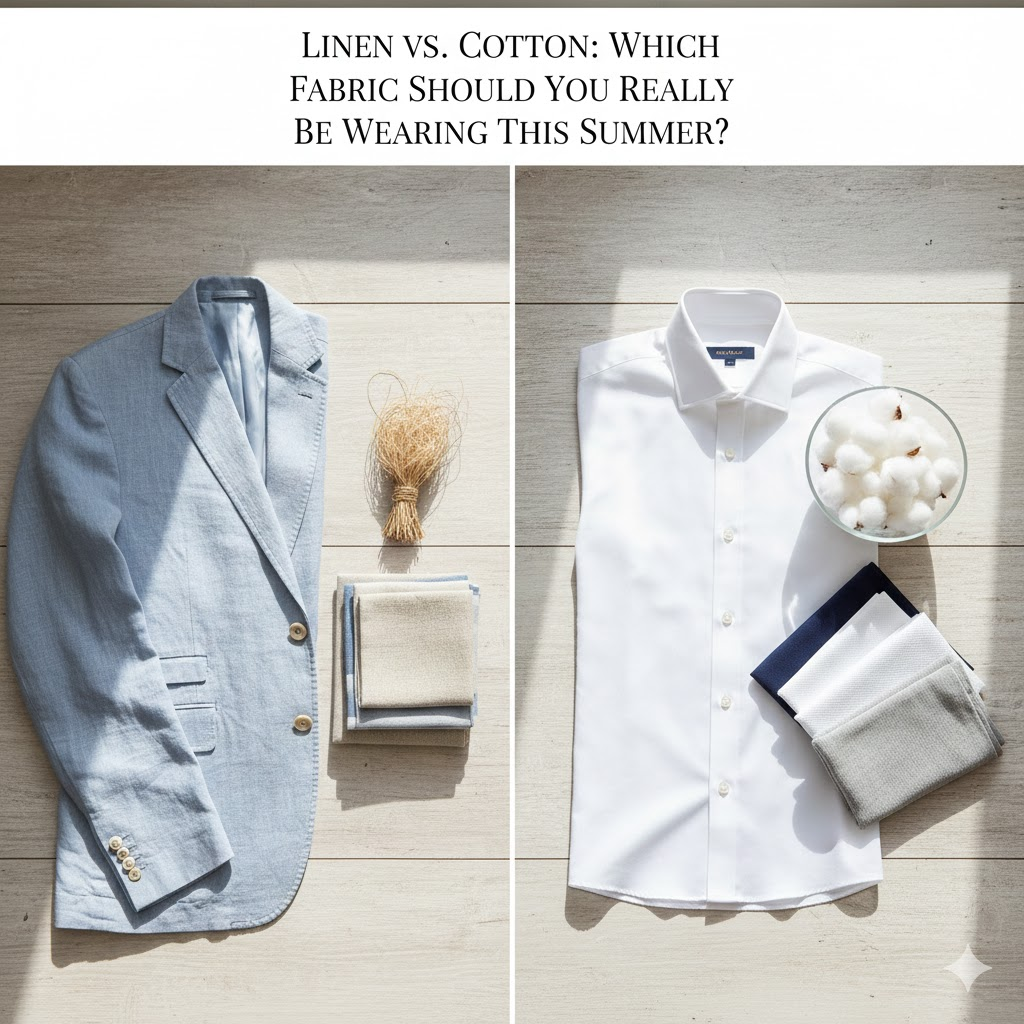
Linen vs. Cotton: Which Fabric Should You Really Be Wearing This Summer?
Summertime style frequently involves making concessions in order to look put together while frantically attempting to remain cool. When it comes to men’s warm-weather wardrobes, linen and cotton are always at the top of the list. Both are breathable, made of natural fibres, and have been mainstays in menswear for generations. However, they are not at all interchangeable.
It’s not just about picking a shirt; it’s also about choosing comfort, durability, and expressing a specific style when you know the distinctive qualities of linen over cotton. We’ll go deeply into the world of these two powerful textiles in this in-depth guide, assisting you in determining which one merits a prominent place in your summer rotation.
1. Cotton: The Ubiquitous Everyday Hero
The Fabric Education (Quality Proof)
Cotton is without a doubt the world’s most popular fabric. You probably already have a large amount of cotton clothing in your closet. Its remarkable adaptability, suppleness, and affordability are the main reasons for its popularity.
The Good: Why We Love Cotton
- Softness: Cotton fibres are wonderfully comfortable against the skin because they are naturally soft and get increasingly softer with every wash.
- Breathability: Cotton’s natural fibre permits air to flow, which aids in the body’s dissipation of moisture and heat.
- Cotton’s great absorbency allows it to absorb perspiration and make you feel dryer, but it can also retain that moisture.
- Durability: Cotton is a relatively strong fibre, especially when wet, making it easy to wash and maintain, even though it isn’t as strong as linen.
- Versatility: Cotton can be woven into a wide range of textures and weights, from crisp poplin dress shirts to soft jersey t-shirts and tough denim.
- Cotton retains dyes effectively, resulting in a wide range of vivid and long-lasting hues.
- Affordability: Cotton is typically more affordable and accessible than many other natural fibres.
The Not-So-Good: Cotton’s Weaknesses
The Fabric Education (Quality Proof)
- Cotton can wrinkle even though it is less likely to do so than linen, particularly in thinner weaves or when packed tightly.
- Drying Time: Cotton can take a long time to dry once wet due to its high absorbency, which makes it less suitable for situations requiring rapid drying or excessive perspiration.
- Shrinkage: Washing or drying cotton at high temperatures can cause it to shrink.
- Water Retention: Cotton may become saturated and feel heavy and clinging rather than drying fast in extremely humid environments or after perspiring a lot.
- Pesticide Use: Organic cotton mitigates the resource-intensive and pesticide-intensive nature of conventional cotton growing.
2. Linen: The Ancient Art of Effortless Elegance
The Fabric Education (Quality Proof)
With a history spanning thousands of years, linen is among the world’s oldest materials to be farmed. Linen, which comes from the flax plant, is praised for its unique texture, extraordinary strength, and unmatched breathability, particularly in hot weather.
The Good: Why We Choose Linen for Summer

The Good: Why We Choose Linen for Summer
The Fabric Education (Quality Proof)
Stay cool with linen. Its breathable, moisture-wicking fibers act as natural air conditioning. Durable, eco-friendly, and luxurious, it’s the ultimate hypoallergenic choice for effortless summer style.
- Superior Breathability: Because linen fibres are hollow, there is a lot of ventilation. In intense heat, its special structure functions as a natural air conditioner, making it much cooler than cotton.
- Cotton retains moisture, but linen wicks it away. It prevents that clammy, sticky feeling by drawing moisture away from the body and drying far more quickly than cotton.
- Outstanding Strength: One of the strongest natural fibres, linen gets even stronger when it gets wet. This contributes to its incredible durability and longevity.
- Natural Luster: Linen has a subtle, natural sheen that gives it a more refined and luxurious appearance than cotton.
- Hypoallergenic & Anti-bacterial: Linen naturally resists bacteria and fungi, making it an excellent choice for sensitive skin.
- Distinctive feel: As linen ages, its distinctive, relaxed, and beautiful feel is enhanced by the slight inconsistencies in the weave known as slub.
- Eco-Friendly: When grown ethically, flax requires less water and chemicals to grow than cotton, making linen a more sustainable option.
The Not-So-Good: Linen’s Quirks
- The most well-known feature of linen is wrinkling (also known as the “Wrinkle-Prone Charm”). It retains such creases and wrinkles effortlessly. This is part of its laid-back appeal to some, but it’s a deal-breaker to others.
- Less Elasticity: Linen may initially feel a little stiffer than cotton due to its lower natural elasticity.
- Cost: Due to the more labor-intensive harvesting and processing of flax, linen garments are typically more expensive than their cotton counterparts.
- Initially Rougher Texture: While it softens beautifully over time, new linen can feel a bit stiffer or coarser than cotton.
3. The Showdown: Cotton vs. Linen for Your Summer Wardrobe
Let’s pit them against each other in key summer style categories:
| Feature | Cotton | Linen | Winner (for Summer) |
| Breathability | Good | Excellent | Linen |
| Moisture Mgmt. | Absorbs & holds moisture | Wicks away & dries quickly | Linen |
| Wrinkling | Moderate | High (embraced as part of its charm) | Cotton (if you dislike wrinkles) |
| Softness | High (immediately soft) | Softens with wear and washing (starts stiffer) | Cotton (initial) / Linen (long-term character) |
| Durability | Good | Excellent (especially when wet) | Linen |
| Formality | Versatile (from casual to formal) | More casual, but can be dressed up | Cotton (more crisp formal options) |
| Cost | Generally lower | Generally higher | Cotton |
| Eco-Friendliness | Varies (Organic Cotton is better) | Generally high (less water/pesticides) | Linen |
4. When to Choose Which Fabric
Choose Cotton When:
- For formal occasions, business casual, or when you want a constantly polished appearance, you need structure and crispness. Consider a fitted cotton chino or a clean cotton poplin dress shirt.
- If you don’t like the “slubby” texture of linen, you would rather have a smoother, gentler feel.
- If you’re on a tight budget, cotton provides outstanding durability and value.
- You need something absorbent: You want the cloth to absorb any minor perspiration that may develop throughout daily wear.
- You’re concerned about wrinkles: Cotton can be ironed more smoothly and is much less likely to crease than linen, even if it is not wrinkle-proof.
Choose Linen When:
- It’s extremely hot and muggy: Perfect for hot summer days, beach weddings, tropical getaways, or anyplace you require quick drying and maximum ventilation.
- You embrace carefree elegance: Linen’s inherent creases add to its allure and give it a carefree, elegant summertime vibe.
- You desire a unique texture: Cotton just cannot match the delicate sheen and natural slub of linen.
- You like longevity and durability: A well-made linen clothing will last for many years and frequently gets better with time.
- You favour sustainable, natural solutions: The environmental impact of linen is typically lower than that of traditional cotton.
5. The Best of Both Worlds: Cotton-Linen Blends
Unable to make a decision? Cotton-linen blends are the ideal compromise found in many clothing items. The goal of these textiles is to combine the best aspects of both:
- Linen’s breathability
- Cotton’s softness and decreased wrinkling
- Better comfort and draping
Compared to 100% linen, blends are more versatile and frequently require less maintenance, making them a great option for a greater variety of events.
Conclusion: Your Summer Style, Tailored to You
The decision between linen and cotton ultimately boils down to individual taste, the particular environment, and the formal nature of the event.
- Linen is the best option for ultimate cool, relaxed sophistication amid sweltering heat.
- Cotton continues to be an indispensable fundamental for its versatile comfort, structure, and softer hand feel.
In a well-rounded summer clothing, both materials are essential. Knowing their special strengths gives you the ability to make better decisions, so no matter how high the temperature climbs, you will always feel and look your best.
Go forth and discover the subtleties of these amazing natural fibres and create a summer outfit that perfectly complements the season and your personal style.